Honey Bloom Display Font for Web Design Projects
Honey Bloom for Creative Portfolio Websites
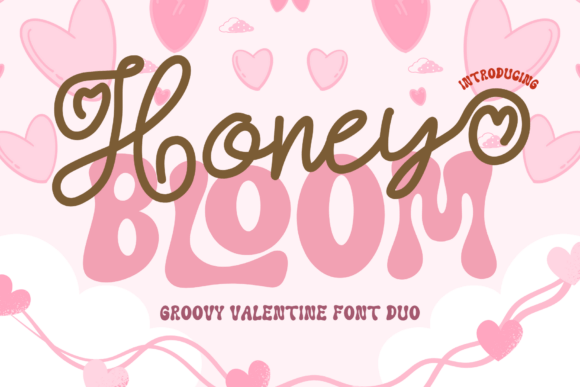
When I first tested Honey Bloom on a creative portfolio website, I was immediately drawn to its groovy display font. The rounded, bouncy letterforms stood out instantly against the clean background, making headlines feel dynamic and engaging. Paired with the soft, flowing script font, it added a touch of elegance that balanced the overall design. This combination made the site feel both modern and approachable—perfect for showcasing a designer’s work.
I used Honey Bloom as the primary font for section headings and hero titles. The display font had enough character to catch attention without overwhelming the reader. For body text, I paired it with a simple sans serif font to maintain readability and ensure a clear visual hierarchy across the page.
Honey Bloom in Boutique Online Store Branding
Next, I experimented with Honey Bloom on a boutique online store. The brand needed a font that felt playful yet professional. The groovy display font fit perfectly for product banners and promotional headers, while the script font was ideal for call-to-action buttons and special offers. It gave the site a unique identity that stood out from competitors.
I found that using Honey Bloom on mobile layouts required careful spacing and sizing. The rounded edges of the display font helped it render smoothly on smaller screens, but I adjusted the line height to avoid crowding. On dark backgrounds, I used a light text color to ensure contrast and readability.
Honey Bloom for Coaching Website Headlines
For a coaching website, I wanted a font that conveyed trust and inspiration. Honey Bloom delivered exactly that with its soft, flowing script font used for emphasis and elegance. I applied the display font to the main headline in the hero section, which drew the eye naturally and encouraged scrolling down the page.
The script font worked well for testimonials and quotes, adding a personal touch that aligned with the coach’s personality. I also used it sparingly for subheadings, ensuring it didn’t distract from the main message. The result was a cohesive look that felt both polished and inviting.
Honey Bloom in Product Landing Pages
On a product landing page, I tested Honey Bloom for key messaging. The display font was perfect for feature titles and pricing sections, where boldness and clarity were essential. The script font came into play for taglines and promotional phrases, creating a sense of urgency and exclusivity.
I noticed that the rounded shapes of the display font helped break up long blocks of text, making the page more scannable. I also used it for buttons, though I kept the text short to maintain legibility. The balance between the two fonts made the page visually appealing without sacrificing usability.
Honey Bloom for Blog Headers and Editorial Content
In a blog redesign project, I used Honey Bloom for article headers and category titles. The groovy display font brought energy to the layout, while the script font provided a subtle contrast for emphasis. It worked especially well when paired with a clean, modern sans serif font for the body copy.
I ensured that the font sizes and weights were optimized for different screen sizes. On desktops, the display font was larger and bolder, while on mobile, it scaled down slightly to keep everything readable. The soft curves of the script font also added warmth to the editorial feel of the site.
Honey Bloom for Digital Brand Kits and Campaign Pages
When building a digital brand kit, I included Honey Bloom as a core typography choice. Its versatility made it suitable for logos, social media posts, and campaign pages. The display font was great for logo text, while the script font added flair to promotional graphics and email headers.
I checked the font’s webfont availability and file formats to ensure it would load quickly on websites. It supported multiple languages, which was important for a global audience. The commercial font license also allowed me to use it across various client projects without any legal issues.
Honey Bloom in Responsive Layouts and Fast-Loading Sites
One thing I learned early on was how crucial font optimization is for performance. Honey Bloom, being a display font, didn’t slow down the site when used responsibly. I focused on using it only for decorative elements and headlines, leaving the body text to a simpler, faster-loading font.
I also tested Honey Bloom in image overlays and dark mode themes. The rounded edges and soft curves made it stand out without clashing with the background. The font’s ability to adapt to different contexts made it a reliable choice for fast-loading, responsive designs.
Honey Bloom for Brand Consistency and User Engagement
Throughout these projects, I saw how Honey Bloom contributed to brand consistency and user engagement. Its unique style helped create a memorable visual identity, while the script font added personality to key messages. Users responded positively to the balance of playfulness and professionalism it offered.
By using Honey Bloom strategically, I could guide the reader’s eye through the content, enhance the brand’s tone, and improve the overall user experience. Whether it was for a creative portfolio, an online store, or a coaching site, the font played a vital role in shaping the final outcome.